The Computer from the Seabed
Sponge divers sheltering from a storm found a wreck full of statues. Hidden among the treasures was a lump of corroded bronze that would rewrite the history of technology.
Read the story →In just over a year, Britain built a battleship so advanced that every other battleship in the world, including its own, was suddenly second-rate.
Admiral Jacky Fisher, head of the Royal Navy, believed the battleship of the future should carry only the heaviest guns, and be fast enough to choose when and where to fight. The battles of the Russo-Japanese War, including Tsushima, seemed to prove him right.
Her keel was laid in October 1905. Materials were gathered in advance and work went on around the clock. She was launched in February 1906 and ready for trials little more than a year after construction began.
She carried ten 12-inch guns, where earlier battleships carried four, and she was the first battleship driven by steam turbines, which made her faster than any rival.
Her name became the word for a new kind of warship. Germany, the United States and Japan raced to build dreadnoughts of their own, and the naval arms race that followed became one of the causes of the First World War.
Sponge divers sheltering from a storm found a wreck full of statues. Hidden among the treasures was a lump of corroded bronze that would rewrite the history of technology.
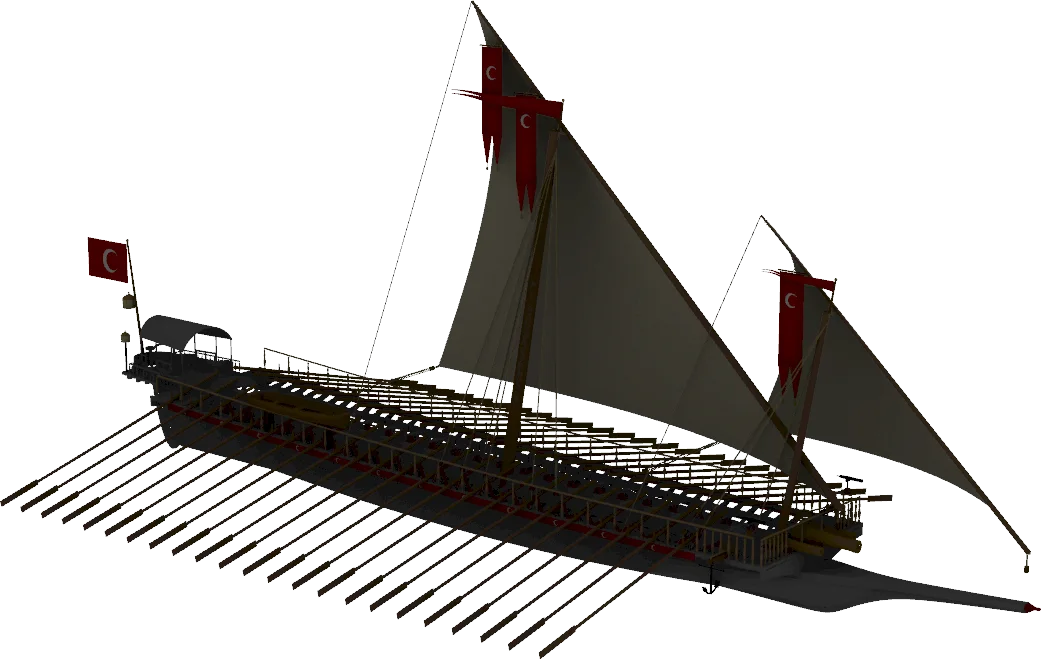
Read the story →A great chain closed the Golden Horn to the Ottoman fleet. So Sultan Mehmed II did something no one believed possible: he sent his ships over the land.
Read the story →A schooner from New York sailed into the heart of British yachting and won a silver cup. The race she started has never ended.
Read the story →