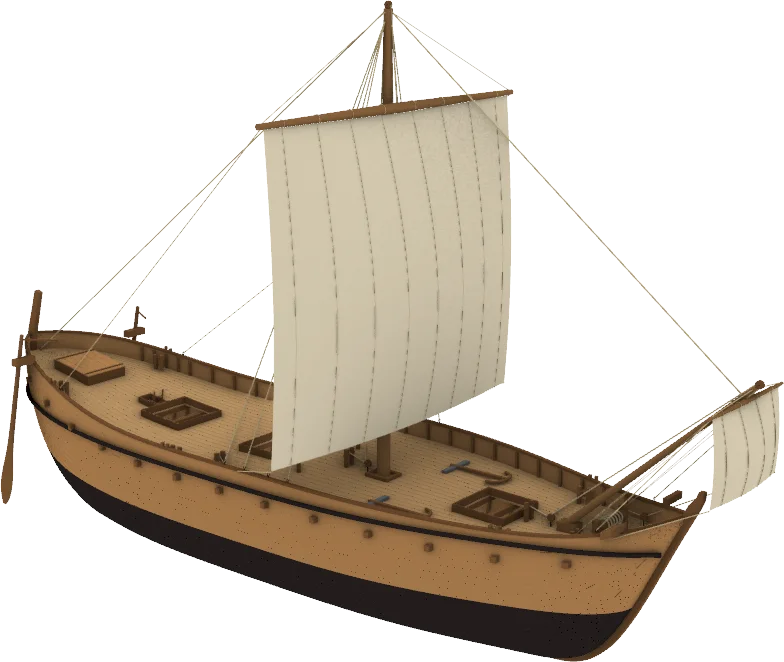
The Khufu Ship
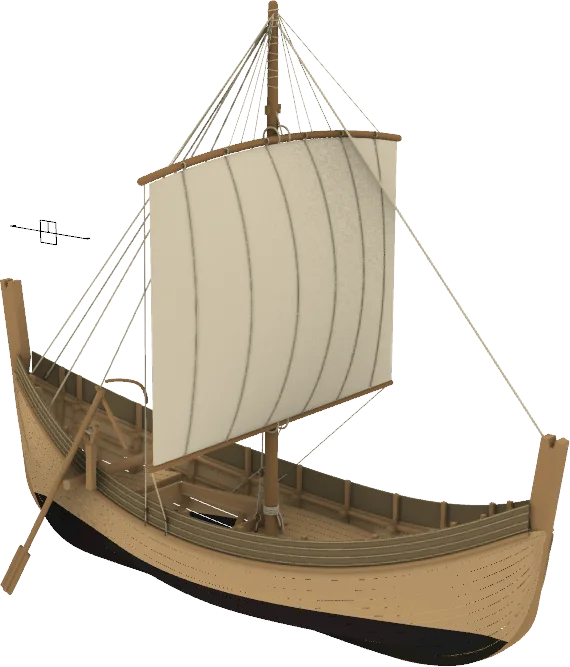
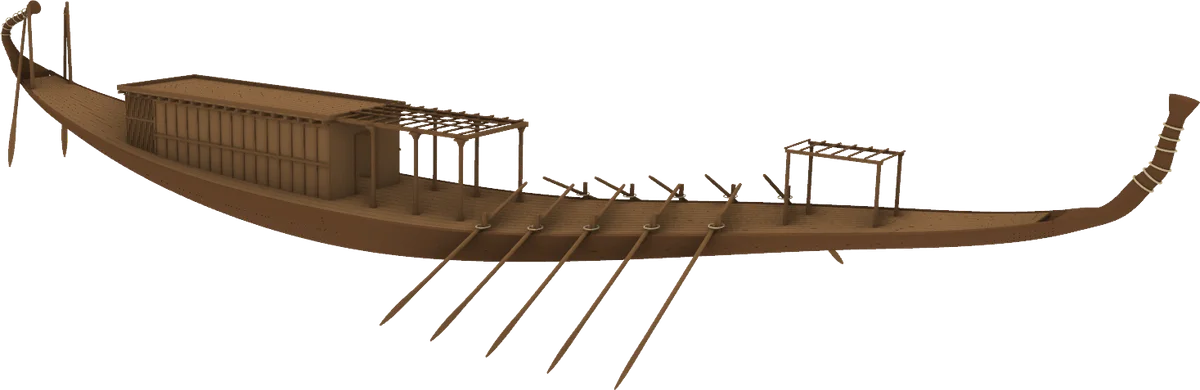
Buried in a pit beside the Great Pyramid for four and a half thousand years, she is one of the oldest, largest and best-preserved ships from the ancient world.
Merchant & civilian ships
Every cargo, every crossing, every catch: the hard-working ships that have carried the world on their backs.


Buried in a pit beside the Great Pyramid for four and a half thousand years, she is one of the oldest, largest and best-preserved ships from the ancient world.
More than three thousand years ago a merchant ship sank off the coast near Kaş, carrying a king's ransom of copper, tin, glass and gold. A sponge diver found her in 1982.
Sponge divers sheltering from a storm in 1900 found a wreck full of bronze and marble statues. Among the treasures was a lump of corroded bronze that turned out to be the world's first computer.
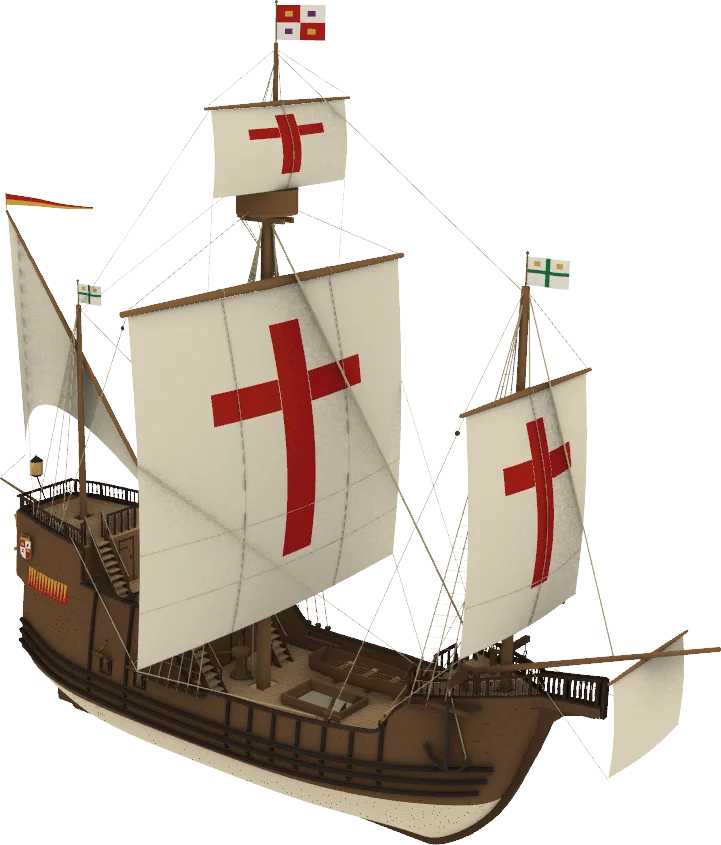
The flagship of Christopher Columbus crossed the Atlantic in 1492 and never came home. On Christmas Day she ran aground off Hispaniola.
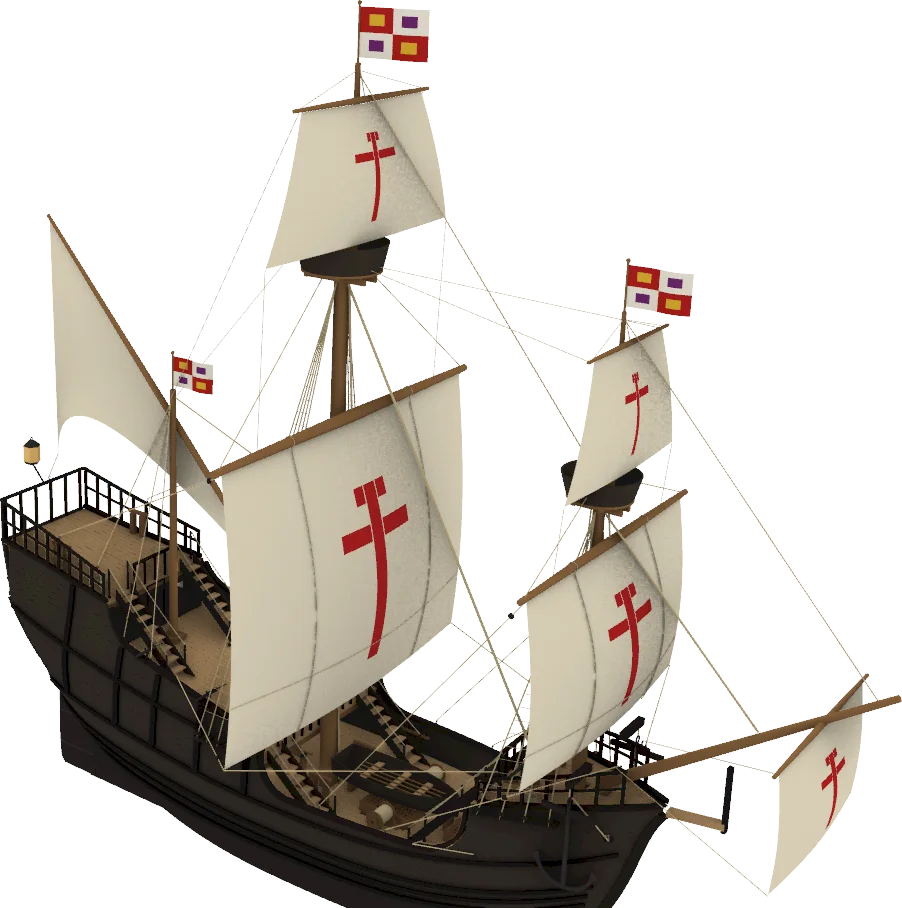
Five ships left Spain to sail around the world. Three years later, one battered ship came home with eighteen men. She was the first ship to circle the globe.
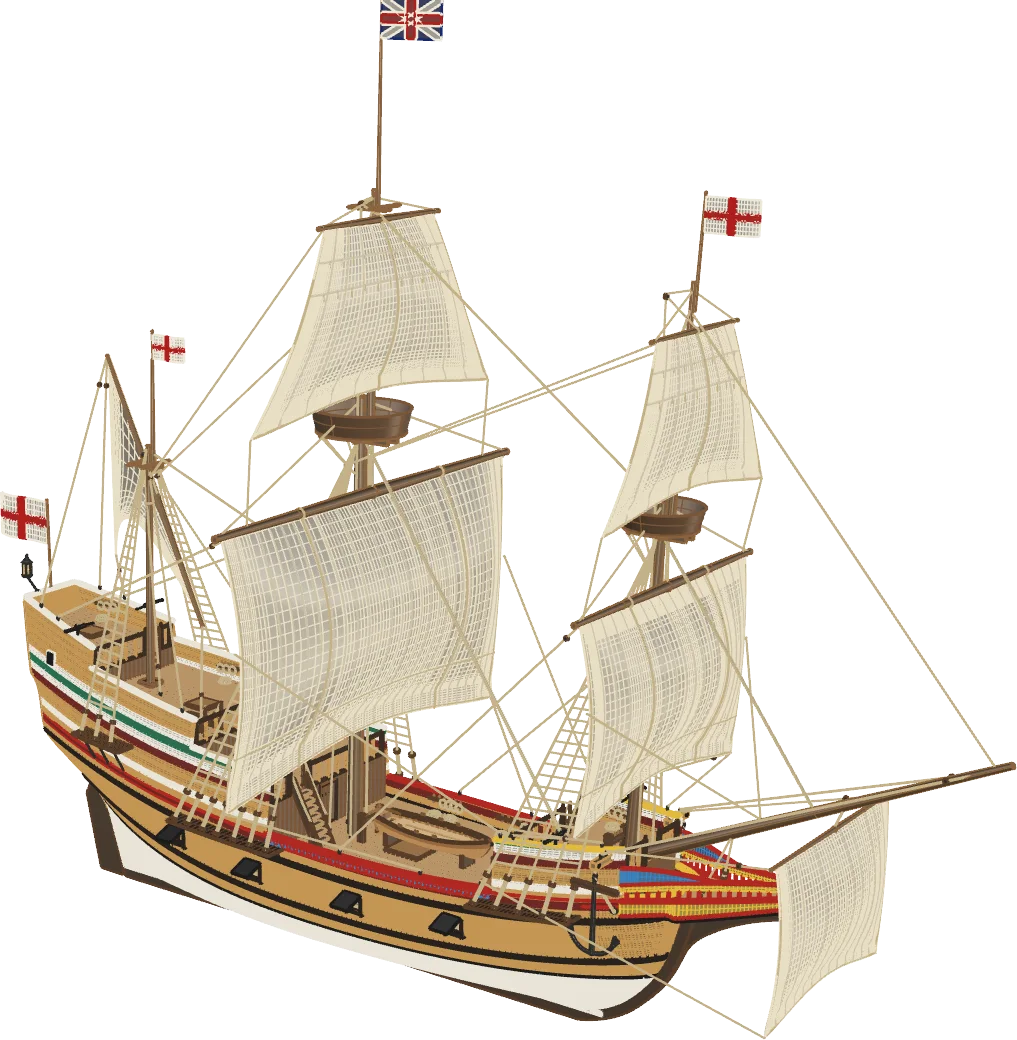
An ordinary wine trader carried 102 passengers across a stormy Atlantic in 1620, and became one of the most famous ships in American history.
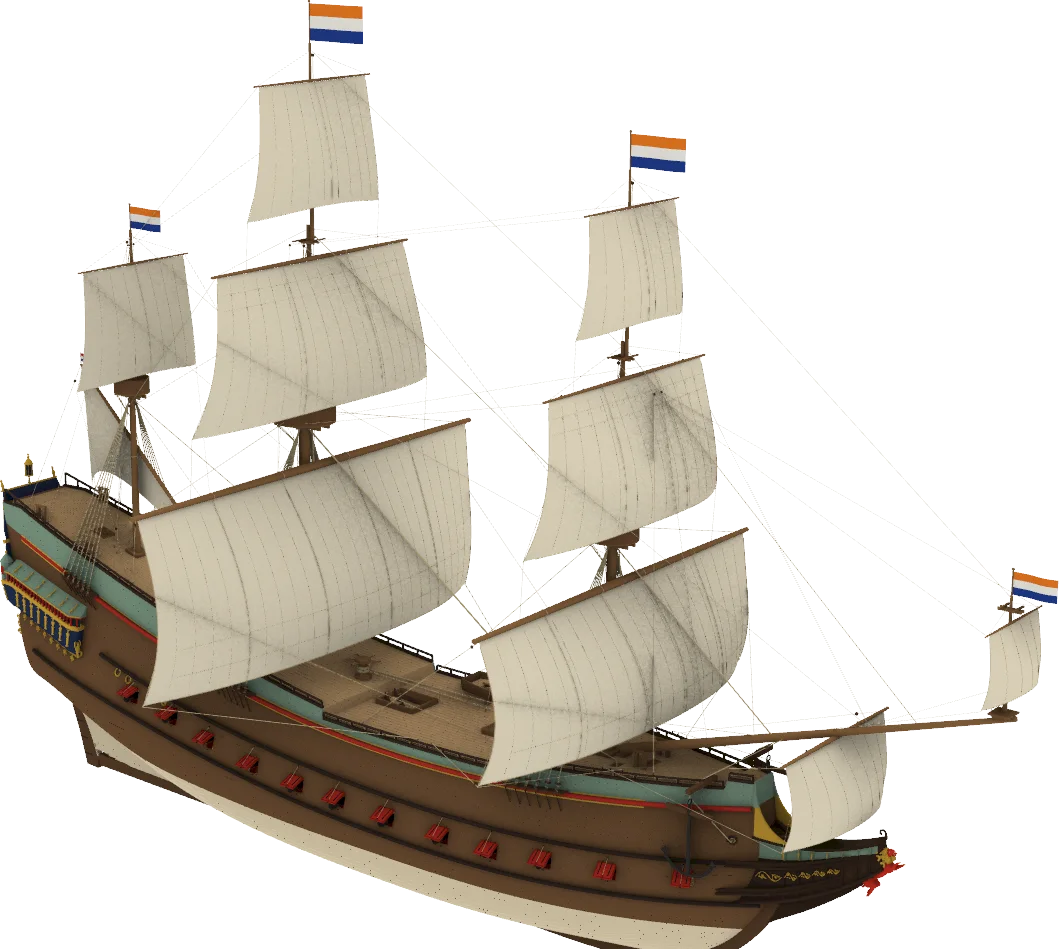
The pride of the Dutch East India Company struck a reef off Australia on her maiden voyage. What happened next on those islands is one of the darkest stories of the sea.
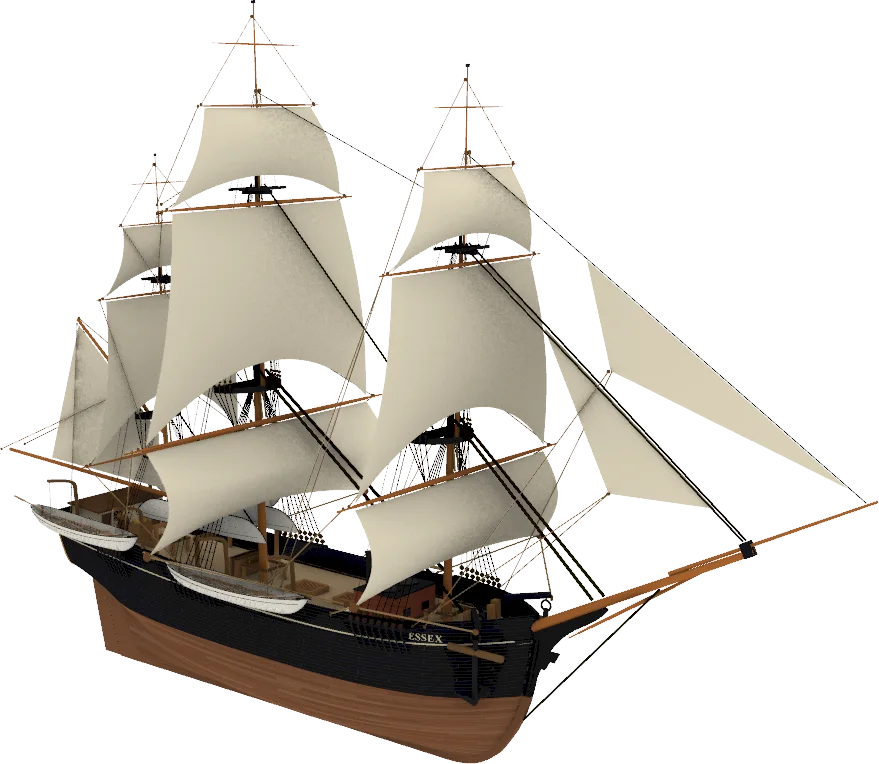
In the middle of the Pacific, a sperm whale turned and rammed the ship that was hunting it. Her story inspired Moby-Dick.
The last wooden whaleship in the world. She made 37 voyages over 80 years, and she still sails today.
In 1851 a schooner from New York beat the best yachts in Britain around the Isle of Wight, and gave her name to the oldest trophy in international sport.
The Ship of Gold. She sank in a hurricane carrying tonnes of California gold, and her loss helped tip the United States into a financial panic.
Isambard Kingdom Brunel built a ship six times bigger than anything afloat. She was a commercial disaster, until she joined two continents with a telegraph cable.
She was found sailing on her own in the middle of the Atlantic, with her cargo intact and not a soul aboard. Nobody has ever known what happened.
She was built to race tea home from China, and launched the same week the Suez Canal opened. She became one of the fastest sailing ships ever anyway.
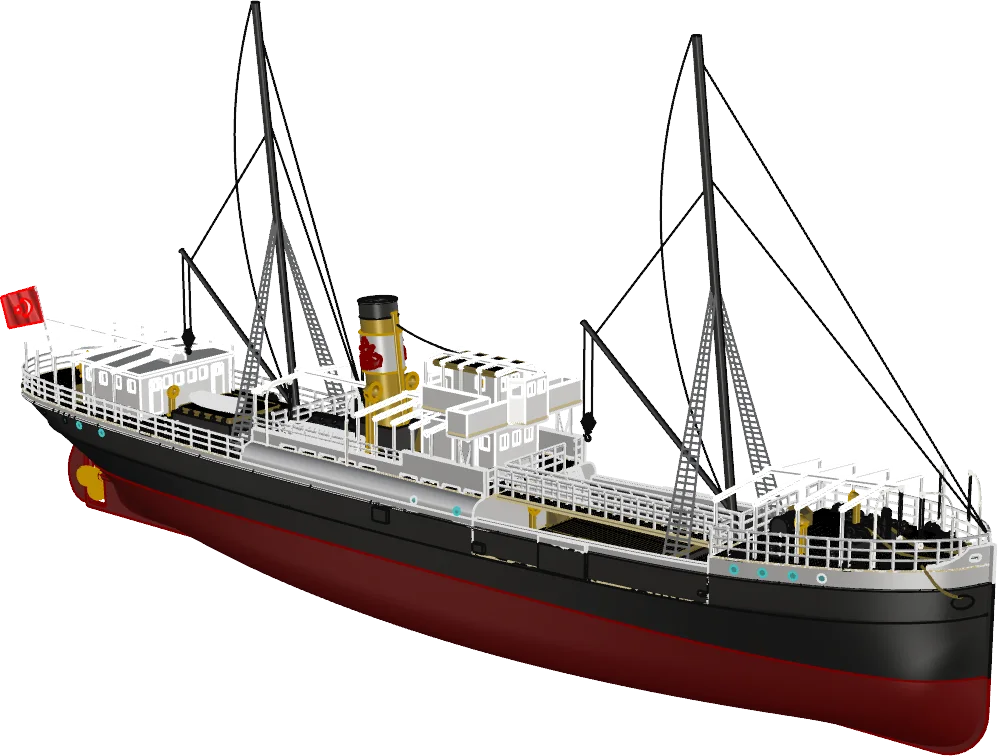
An old, tired steamer carried Mustafa Kemal from Istanbul to Samsun in May 1919. When he stepped ashore, the Turkish War of Independence began.
Built with a rounded hull so the ice would squeeze her upwards instead of crushing her, she sailed farther north and farther south than any wooden ship before her.
She steamed into a cyclone off Queensland in 1911 and vanished with all 122 people aboard. Half a century later she was found, covered in coral and teeming with life.
One of the last great commercial sailing ships, a Flying P-Liner that rounded Cape Horn many times. In 1957 a hurricane caught her in the Atlantic.
Two years after Titanic, a Canadian liner sank in just fourteen minutes in the St. Lawrence River. More passengers died than on Titanic.
For twenty years no ship in the world could cross the Atlantic faster. Her passengers called her the Grand Old Lady of the Atlantic.
Built to tow sailing ships, log rafts and barges along the Pacific coast, she still floats at San Francisco's Hyde Street Pier.
The eldest of the three sisters, and the only one to live a long life. She carried troops through a world war, rammed and sank a U-boat, and earned the name Old Reliable.
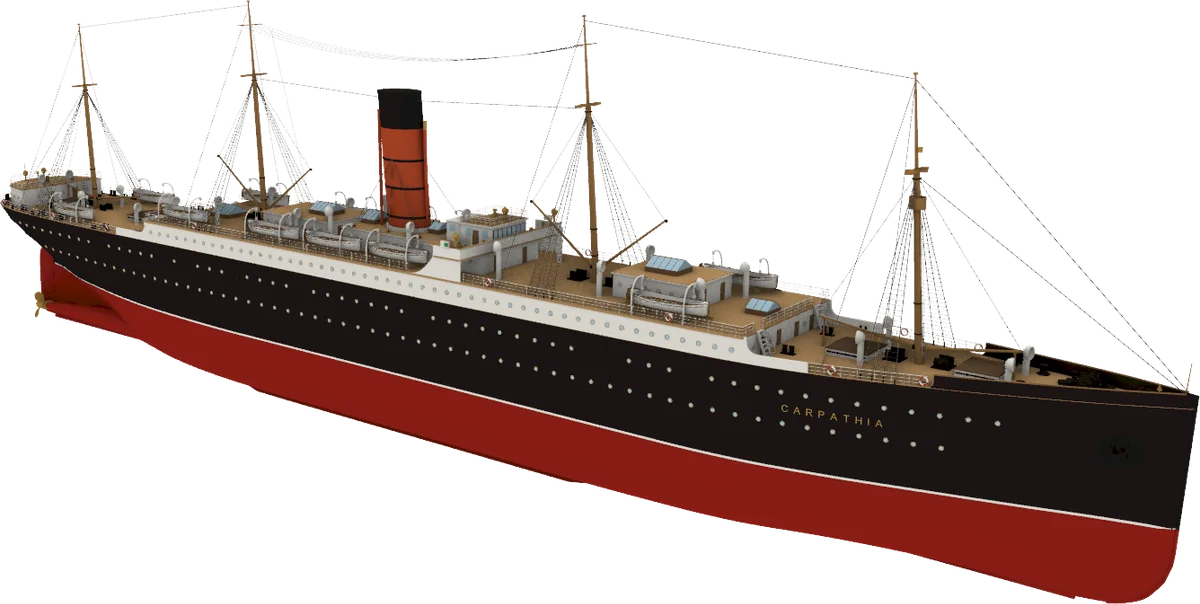
A modest liner with a single funnel, she became famous in one night: the ship that came for Titanic's survivors.
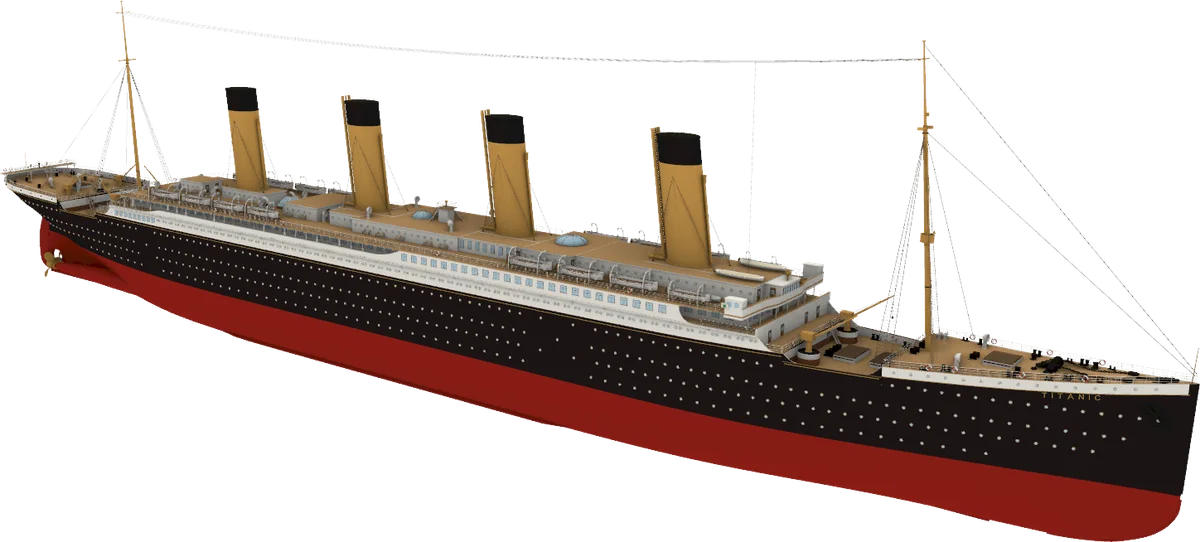
She was the largest ship afloat. Five days into her maiden voyage, she lay on the floor of the North Atlantic.
She was crushed by Antarctic ice in 1915. All 28 of her men came home, and 107 years later the world finally saw her again.
For a time she was the fastest ship on the Atlantic. Her sinking took eighteen minutes and changed opinion across the world.
She fished the Grand Banks all season and then beat every challenger in the races of the fishing fleets. Canada put her on its ten-cent coin.
Many call her the most beautiful liner ever built: a floating palace of Art Deco, and the fastest ship on the Atlantic. She burned and capsized at a New York pier in 1942.
The most glamorous liner of the 1930s became the Grey Ghost of the Second World War, once carrying more than sixteen thousand soldiers on a single crossing.
Built to give German workers holidays at sea, she ended the war crammed with refugees. Her sinking in the frozen Baltic is the deadliest in maritime history.
She lies upright on the floor of the Red Sea, her holds still full of motorcycles, trucks and locomotives. The most famous wreck dive in the world.
A wartime minesweeper became the most famous research ship in the world, carrying Jacques Cousteau and his cameras to show millions what lies beneath the waves.
Of the 2,710 Liberty ships built to win the Second World War, she is one of only two still able to sail. In 1994 she went back to Normandy.
Born as the working boats of sponge divers and fishermen on the Turkish coast, the gulet became the vessel of the Blue Voyage, the most poetic way to see the Aegean.
Six men and a parrot sailed a raft of balsa logs from Peru across the Pacific for 101 days, to prove that ancient people could have done it too.
For 55 years she carried Istanbul between its shores and islands. Now she rests as a museum on the Golden Horn.
On her maiden voyage she crossed the Atlantic faster than any liner before or since. No passenger ship has ever taken back the record she set in 1952.
Italy's most beautiful liner was struck in fog off Nantucket. She stayed afloat for eleven hours, long enough to save almost everyone aboard.
In 1960 two men sealed themselves inside a steel sphere beneath a float of petrol and sank to the deepest point in the ocean, nearly eleven kilometres down.
On 26 April 1956 a converted wartime tanker carried 58 metal boxes from New Jersey to Texas, and quietly started the biggest revolution in shipping history.
The world's first nuclear-powered surface ship. For thirty years she broke a path through the Arctic ice, able to sail for months without refuelling.
The Queen of the Lakes vanished in a November gale on Lake Superior, about fifteen miles from shelter, with all 29 of her crew.
The world's first nuclear-powered merchant ship was built to show that the atom could be used for peace. She looked like a yacht and sailed like the future.
A supertanker took a shortcut past the Isles of Scilly and ran onto a reef. The oil spill that followed was the world's first great tanker disaster.
The last of the great transatlantic liners sailed for nearly forty years, carried soldiers to the Falklands War, and today rests in Dubai as a floating hotel.
The largest British ship ever lost at sea disappeared in a typhoon without sending a distress call. It took twenty years to learn why.
She was called unsinkable, one of the largest semi-submersible rigs in the world. On a February night in 1982 a storm on the Grand Banks took her and all 84 people aboard.
The longest ship ever built. She was bombed and sunk in a war, raised from the seabed, and sailed on for another twenty years.
A brand-new Swedish ferry sank off Cyprus on her maiden voyage, with more than a hundred lorries on board. Today she is one of the finest wreck dives in the Mediterranean.
She sailed from Zeebrugge with her bow doors still open. Within minutes the sea flooded her car deck, and she rolled over just outside the harbour.
Just after midnight in March 1989 she ran onto a reef in Alaska's Prince William Sound. Her oil spill changed how the world builds and runs tankers.
A swordfishing boat from Gloucester, Massachusetts. In October 1991 she sailed into the storm the world would come to call the Perfect Storm.
On a stormy September night in 1994 the bow door of a Baltic ferry tore away. Within an hour she was gone, in one of the worst peacetime shipwrecks in Europe since the Second World War.
On a calm January night in 2012, a giant cruise ship sailed too close to the island of Giglio. A rock tore open her side, and she rolled over within sight of the harbour.
The largest construction vessel ever built. She can lift an entire oil platform off its legs in one piece and carry it away.
Leaving a Georgia port with 4,200 cars, she rolled onto her side in minutes. Rescuers cut through her hull to free four men trapped inside.
Designed and built in Istanbul, she listens to the rocks beneath the seabed, searching the eastern Mediterranean and beyond for oil and gas.
The largest floating object ever built: a gas plant, a port and a ship in one, anchored far off the coast of Australia.
For six days in March 2021, one of the largest ships in the world lay wedged across the Suez Canal, and world trade held its breath.
Türkiye's first drillship found the largest natural gas field in the country's history, deep beneath the Black Sea.
When she was delivered in 2023 she could carry more containers than any ship ever built: 24,346 of them, stacked across four football pitches of deck.
The largest cruise ship in the world: twenty decks, seven swimming pools and room for more than seven thousand passengers. A city that floats.