The Whale That Struck Back
For once the hunted turned on the hunter. A sperm whale charged a Nantucket whaleship, and her twenty men were left in three small boats in the middle of the Pacific.
Read the story →For once the hunted turned and struck. The whale broke her, the ocean starved her men, and from their story a writer made a legend called Moby-Dick.
From the Drawing BoardNaval Architect's Perspective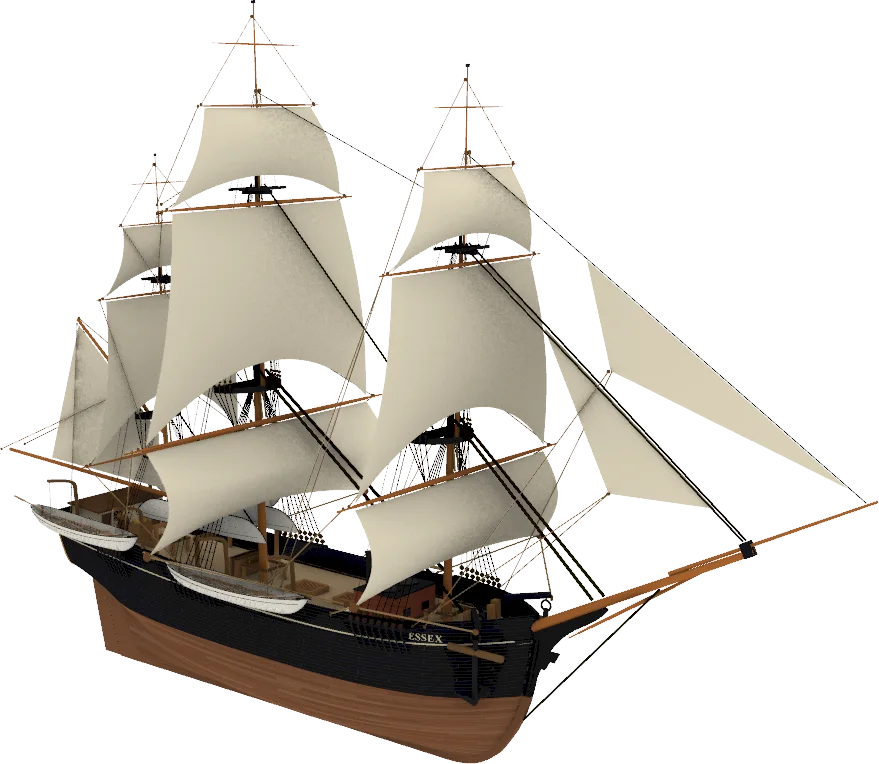
In the middle of the Pacific, a sperm whale turned and rammed the ship that was hunting it. Her story inspired Moby-Dick.
In the early 1800s, Nantucket whaleships sailed for years at a time, hunting sperm whales for the oil that lit the lamps of America and Europe. Essex was already twenty years old when she left the island in August 1819: small, slow and thought to be a lucky ship.
A whaler carried her works on deck. Abaft the fore mast stood the try-works, two iron pots set in brick, where blubber was boiled down to oil at sea. Her whaleboats hung from wooden davits along the rail, ready to be lowered in minutes, and a plank stage was slung outside the starboard waist for the men who cut the whale in.
On 20 November 1820, with her boats away among a pod of sperm whales, a huge bull turned on the ship herself. He struck her under the bow, passed beneath the keel, came round and struck again. Essex filled and rolled onto her side within minutes.
Her twenty men were left in three whaleboats, thousands of kilometres from land. Only eight lived through the months that followed. The story they brought home reached a young sailor named Herman Melville, and from it he made Moby-Dick.
For once the hunted turned on the hunter. A sperm whale charged a Nantucket whaleship, and her twenty men were left in three small boats in the middle of the Pacific.
Read the story →The last wooden whaleship still afloat
Another small ship whose crew ended in open boats on the Pacific