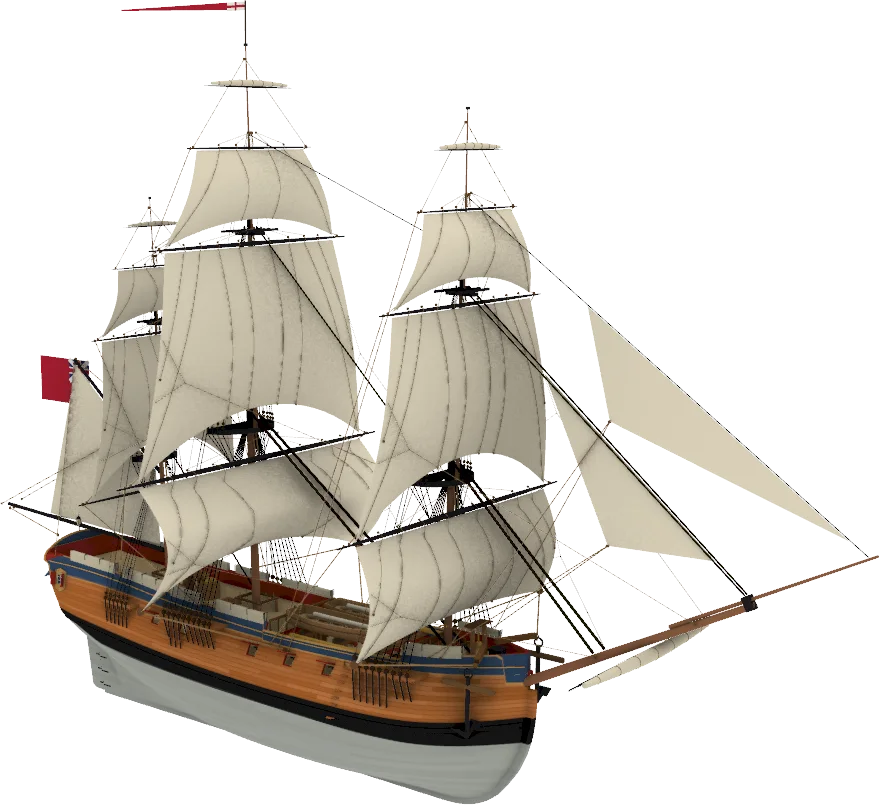
Forty-Seven Days in an Open Boat
The mutineers set their captain adrift with eighteen loyal men in a boat seven metres long. Bligh sailed it 6,700 kilometres to safety.
Read the story →Sent for breadfruit, she found paradise, and paradise turned her crew. Burned at Pitcairn, she still sails in a thousand stories.
From the Drawing BoardNaval Architect's Perspective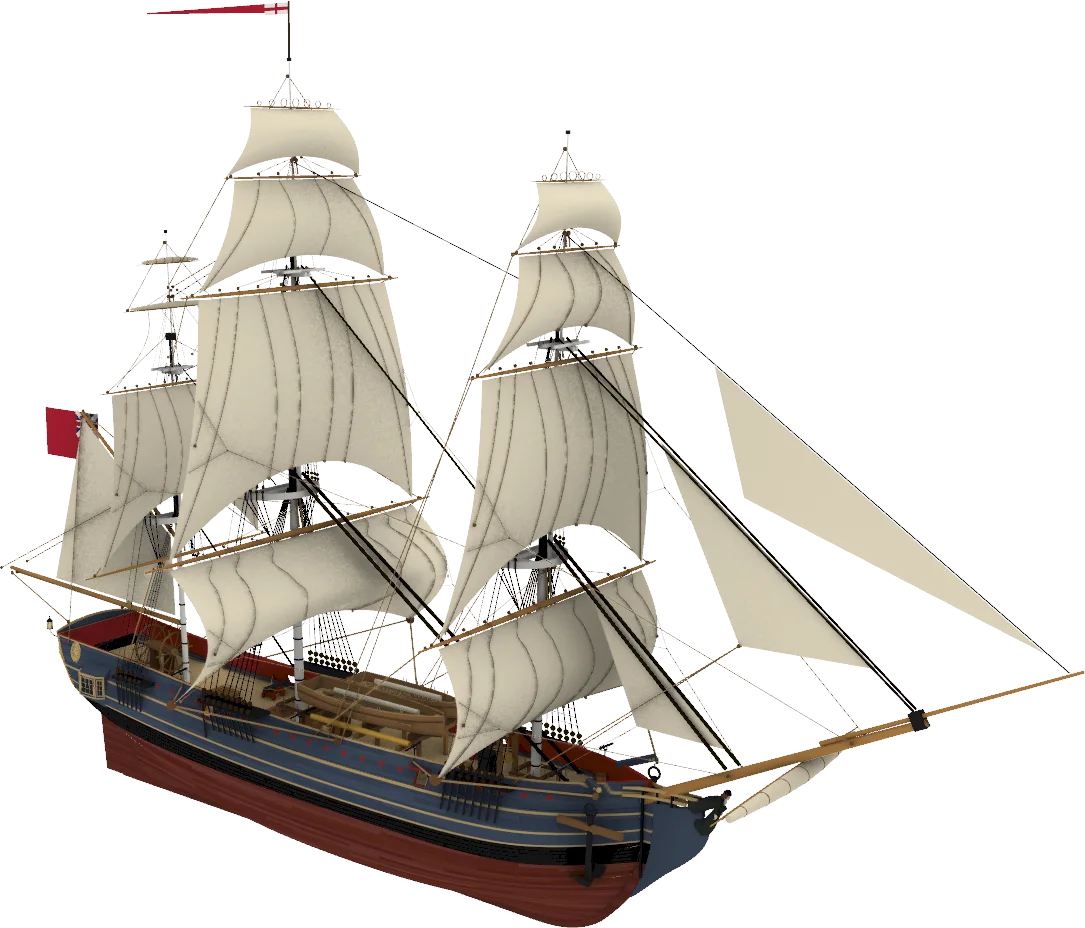
She was sent to carry breadfruit plants from Tahiti. Instead she became the setting of the most famous mutiny in history.
The Royal Navy wanted breadfruit, a fast-growing Pacific food plant, for the plantations of the Caribbean. Bounty was fitted out as a floating greenhouse, and sailed for Tahiti.
After months on the island, many of the crew did not want to leave. Three weeks after sailing, Fletcher Christian and his followers seized the ship and set Bligh adrift in an open boat.
The mutineers set their captain adrift with eighteen loyal men in a boat seven metres long. Bligh sailed it 6,700 kilometres to safety.
Read the story →Another converted collier sent to the Pacific