The King Watched Her Sink
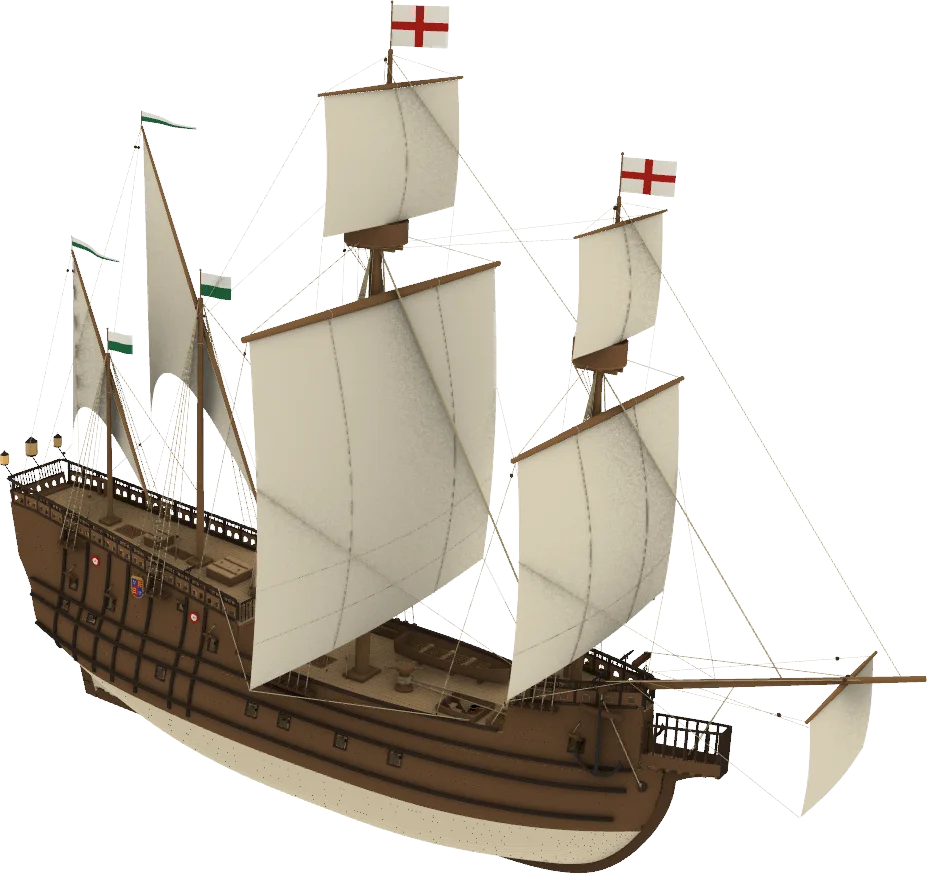
A French invasion fleet lay off the English coast. Henry VIII watched from the shore as his favourite warship sailed out to meet it, heeled over and went down.
Read the story →For once the hunted turned on the hunter. A sperm whale charged a Nantucket whaleship, and her twenty men were left in three small boats in the middle of the Pacific.
Essex had been at sea for more than a year, hunting sperm whales across the Pacific. On 20 November 1820 her boats were out chasing a pod when the lookouts saw an enormous bull whale lying still near the ship.
The whale swam straight at Essex and struck her bow. Then it turned, came back, and hit her again. The ship began to fill and roll over. Her crew grabbed what food and water they could and took to the whaleboats.
They were thousands of kilometres from land. Fearing cannibals on the nearest islands, they decided to sail for South America instead. Weeks became months. Starving men died one by one, and the survivors were forced into terrible choices to stay alive.
Eight men survived. Thirty years later, the writer Herman Melville turned their story into the greatest American sea novel, Moby-Dick.
A French invasion fleet lay off the English coast. Henry VIII watched from the shore as his favourite warship sailed out to meet it, heeled over and went down.
Read the story →Crowds lined the shore to watch the King's new warship set out. She had sailed little more than a kilometre when the wind caught her.
Read the story →The shipwreck was only the beginning. While the commander sailed for help, a mutineer took control of the survivors on the islands, and a reign of terror began.
Read the story →