The Whale That Struck Back
For once the hunted turned on the hunter. A sperm whale charged a Nantucket whaleship, and her twenty men were left in three small boats in the middle of the Pacific.
Read the story →A special exhibition · A day of remembrance
The story of the whaleship Essex
The Pacific Ocean · 20 November 1820
They had come to hunt the whale, and one morning the whale came for them. Out of the blue deep it rose, the largest any of them had ever seen, and struck the ship once, and then again. The Essex filled and sank, and twenty men were left in three small boats in the empty ocean.
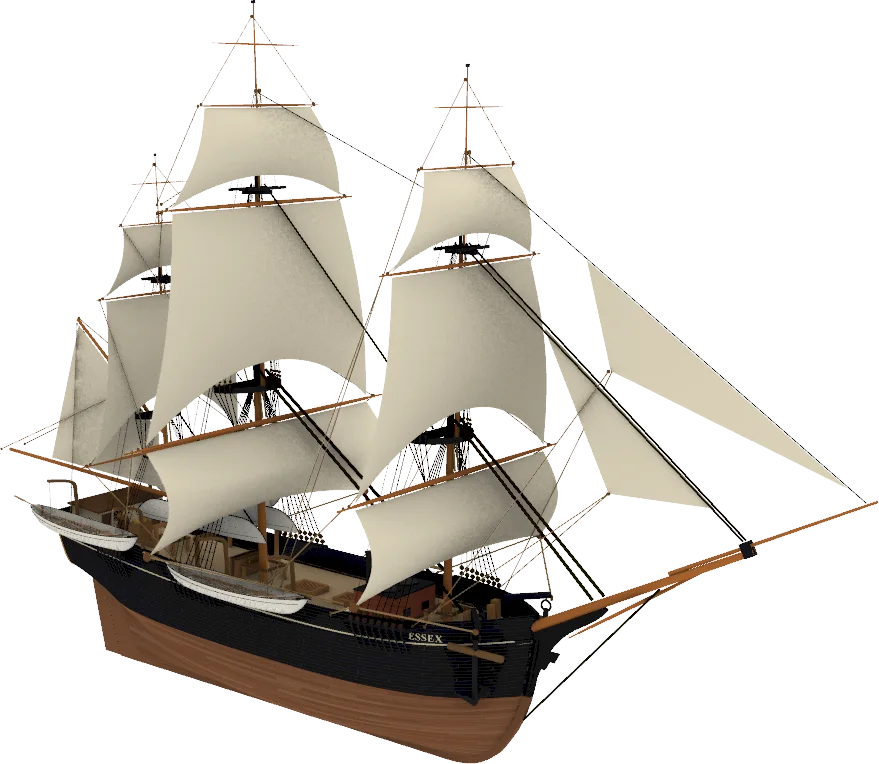
Into the open oceanEssexWhaleship · 1820 · 46.98 m, spanker boom to jib-boom
A sperm whale
Here she lies
Essex
Depth unknown · the Pacific Ocean
Never found
In 1819 the whaleship Essex sailed from Nantucket for the whaling grounds of the Pacific.
On 20 November 1820, a huge sperm whale rammed the ship, swam off, then turned and struck her again head-on. The Essex began to sink.
The twenty men took to three small whaleboats with a little bread and water. Afraid of cannibals on the nearest islands, they chose to sail for South America, thousands of miles away.
Months later, only eight men were rescued. The others died of hunger, thirst and exposure, and the survivors had to do terrible things to stay alive.
A corner of the exhibition
The pages of Essex's life, as a watch officer might have written them.
Log of EssexWhaleship
Essex
1820
Dressed overall
Essex, spelled in the International Code of Signals, as a ship is dressed with flags from stem to stern. Touch a flag to read what it says when flown alone.
Herman Melville heard the story and used it for his great novel Moby-Dick.
Whaling lit the lamps of the world, and the men who hunted whales paid a terrible price.
The Whaling Museum in Nantucket tells the story of the Essex and her crew.
For once the hunted turned on the hunter. A sperm whale charged a Nantucket whaleship, and her twenty men were left in three small boats in the middle of the Pacific.
Read the story →A quiet corner
For those who sailed and did not come home. Light one, and watch it drift over the Pacific Ocean.
The hunters became the hunted in the empty Pacific. Eight came home to tell it.
Remembered every year on 20 November