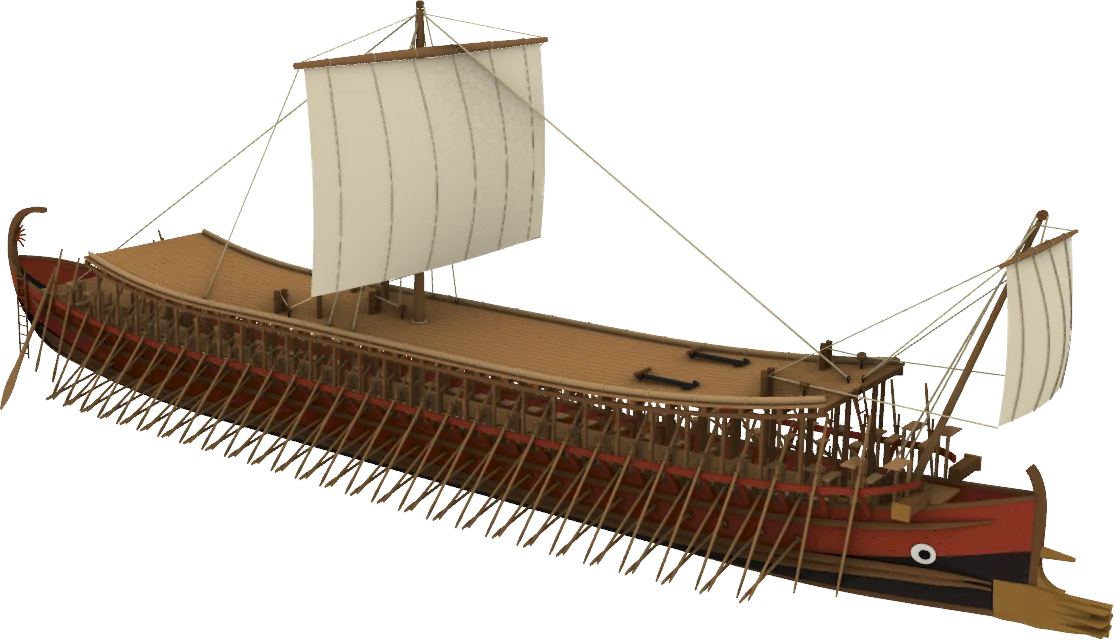
Salamis: The Wooden Wall
Athens was burning. Its people had fled to an island and its hopes rested on a few hundred wooden ships. Their admiral had a plan to lure the mighty Persian fleet into a trap.
Read the story →Admiral Yi Sun-sin lured a Japanese fleet out of a narrow strait, spread his ships in the shape of a crane's wings, and closed them around his enemy.
In 1592 a huge Japanese army landed in Korea and swept north. At sea, one man stood in their way: Admiral Yi Sun-sin, with a small fleet and a few of his new turtle ships.
The Japanese fleet was anchored in a narrow strait where Yi could not fight it properly. He sent a few ships in as bait, then turned them and fled. The Japanese gave chase into open water.
Waiting there, Yi’s fleet spread out in a great curve like the open wings of a crane. As the Japanese ships rushed in, the wings closed around them. Cannon fire poured in from every side, and the turtle ships smashed through the Japanese line.
Dozens of Japanese ships were destroyed or captured. With the sea lanes closed, the invading army could not be supplied by sea, and the war turned. Yi Sun-sin never lost a sea battle.
Athens was burning. Its people had fled to an island and its hopes rested on a few hundred wooden ships. Their admiral had a plan to lure the mighty Persian fleet into a trap.
Read the story →A great Christian alliance gathered the largest fleet it could find to drive the Ottomans from the sea. Barbaros Hayreddin was waiting for them.
Read the story →More than four hundred galleys met at the mouth of the Gulf of Patras. It was the largest naval battle of its age, and the last great battle fought with oars.
Read the story →