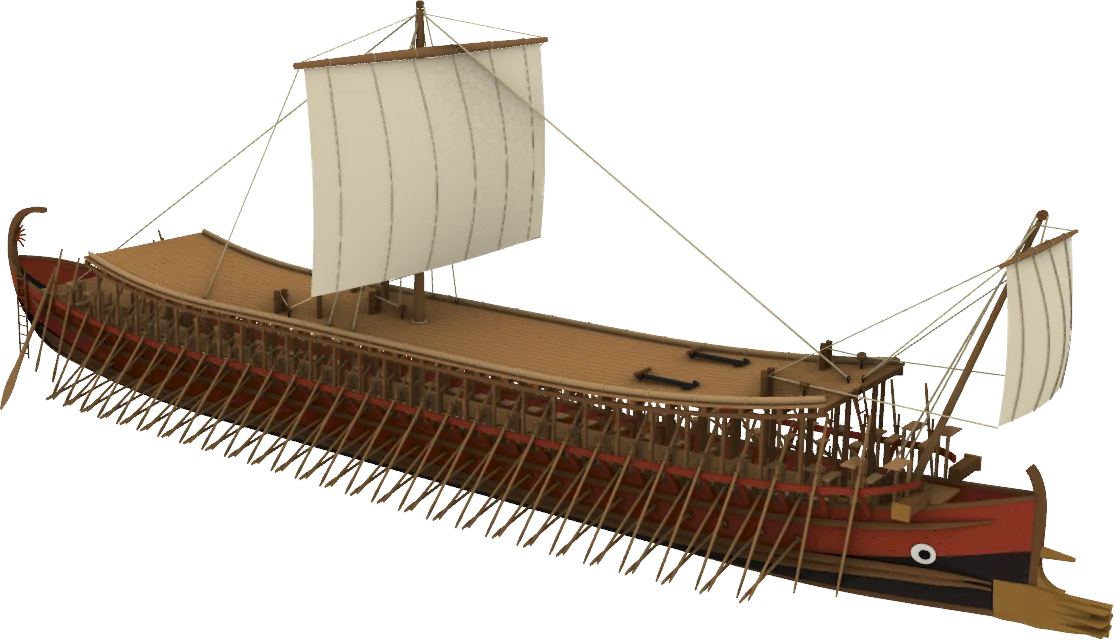
Salamis: The Wooden Wall
Athens was burning. Its people had fled to an island and its hopes rested on a few hundred wooden ships. Their admiral had a plan to lure the mighty Persian fleet into a trap.
Read the story →A tiny, old British submarine dived beneath five rows of mines and against the fierce current of the Dardanelles. At the end of the passage lay the ironclad Mesudiye.
In the first winter of the war, the old ironclad Mesudiye lay at anchor inside the Dardanelles, her guns covering the minefields that blocked the strait.
On 13 December 1914, the British submarine B11 dived at the mouth of the strait. For hours she crept upstream beneath five rows of mines, fighting the strong current that runs out of the Sea of Marmara.
Late in the morning her commander saw Mesudiye through his periscope and fired a single torpedo. It struck near the stern. The old ship rolled over within minutes in the shallow bay.
Thirty-five of her men died. Others were trapped inside the upturned hull. After a day and a half, rescuers cut a hole through her bottom and pulled eight of them out alive. Her guns were salvaged and set up ashore, where they helped defend the strait in the battles of 1915.
Athens was burning. Its people had fled to an island and its hopes rested on a few hundred wooden ships. Their admiral had a plan to lure the mighty Persian fleet into a trap.
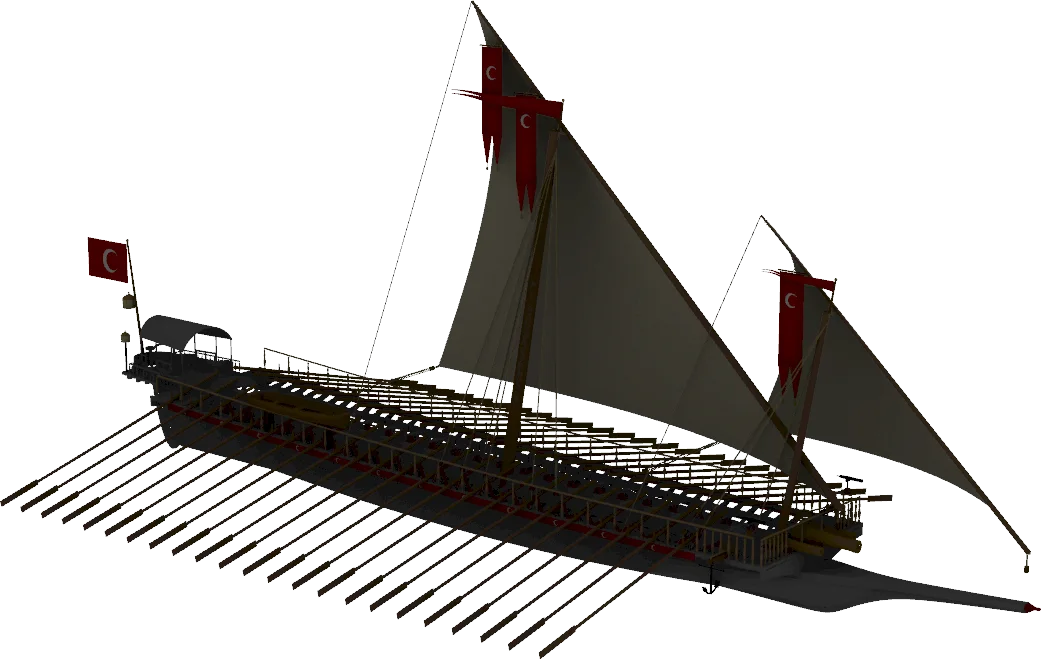
Read the story →A great Christian alliance gathered the largest fleet it could find to drive the Ottomans from the sea. Barbaros Hayreddin was waiting for them.
Read the story →More than four hundred galleys met at the mouth of the Gulf of Patras. It was the largest naval battle of its age, and the last great battle fought with oars.
Read the story →