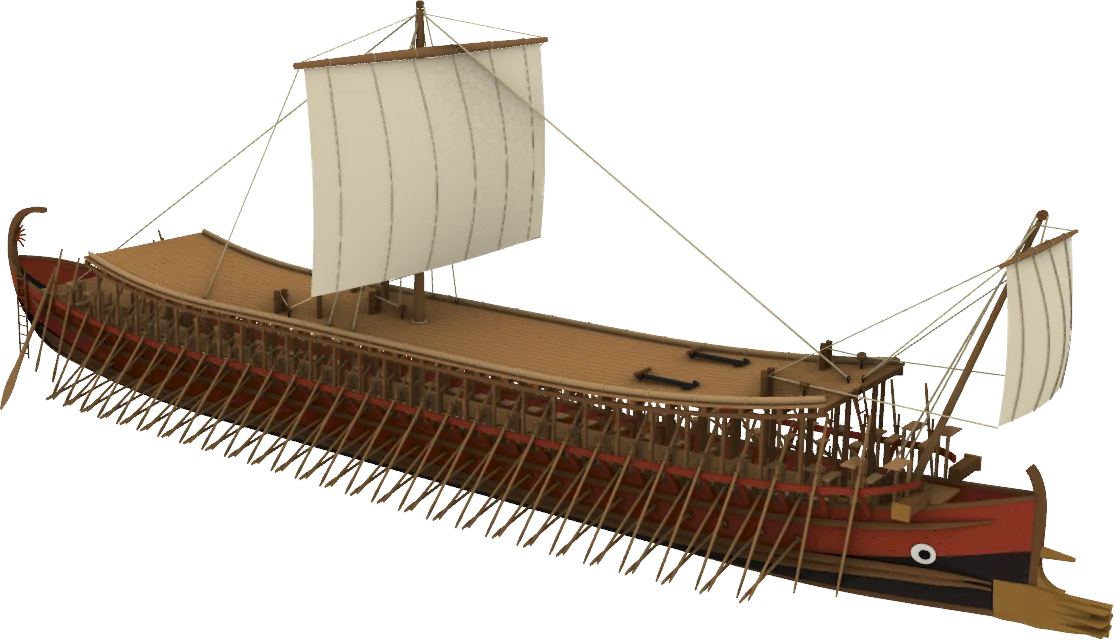
Salamis: The Wooden Wall
Athens was burning. Its people had fled to an island and its hopes rested on a few hundred wooden ships. Their admiral had a plan to lure the mighty Persian fleet into a trap.
Read the story →Six months after Pearl Harbor, American dive bombers found the Japanese carriers at the worst possible moment. In about five minutes, the war in the Pacific turned.
Japan planned to capture Midway, a tiny atoll in the middle of the Pacific, and draw the remaining American carriers into a trap. But American codebreakers had read enough of the Japanese messages to know when and where the attack would come.
On the morning of 4 June, American aircraft attacked the four Japanese carriers again and again. Wave after wave of torpedo bombers was shot down, without a single hit.
Then, a little after ten o’clock, dive bombers from Enterprise and Yorktown arrived high above the Japanese fleet. The carriers’ decks were crowded with planes, fuel and bombs. In about five minutes, three of the carriers were burning wrecks. The fourth was found and sunk later that day.
Japan lost four fleet carriers and many of its best pilots. The United States lost Yorktown. Japan would never again be able to take the offensive in the Pacific.
Athens was burning. Its people had fled to an island and its hopes rested on a few hundred wooden ships. Their admiral had a plan to lure the mighty Persian fleet into a trap.
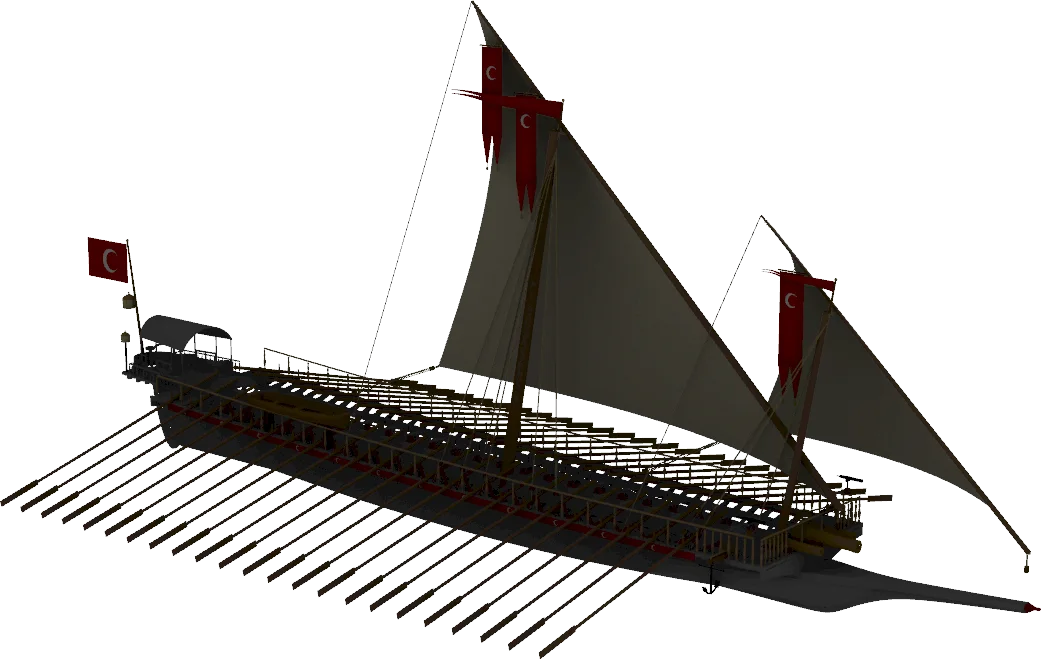
Read the story →A great Christian alliance gathered the largest fleet it could find to drive the Ottomans from the sea. Barbaros Hayreddin was waiting for them.
Read the story →More than four hundred galleys met at the mouth of the Gulf of Patras. It was the largest naval battle of its age, and the last great battle fought with oars.
Read the story →