Forty-Seven Days in an Open Boat
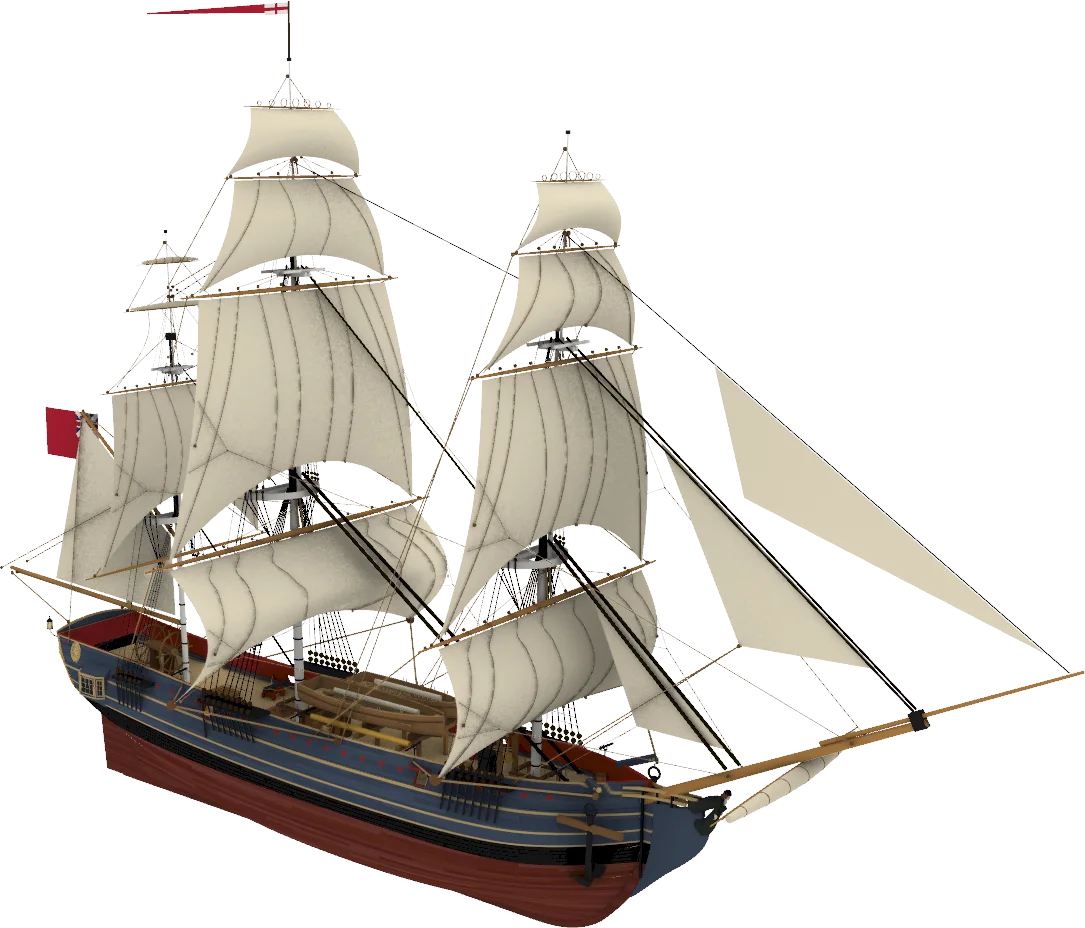
The mutineers set their captain adrift with eighteen loyal men in a boat seven metres long. Bligh sailed it 6,700 kilometres to safety.
Read the story →When Titanic's call for help reached a small Cunard liner 58 miles away, her captain turned her around and drove her through an icefield in the dark.
Carpathia was a modest liner on her way from New York to the Mediterranean. Late that night her only wireless operator, Harold Cottam, was getting ready for bed when he heard Titanic calling for help. A few minutes later, his set would have been switched off. He ran to wake Captain Arthur Rostron.
Rostron turned the ship at once. He had the heating and hot water shut off, so that every bit of steam went to the engines, and posted extra lookouts in the bow. Carpathia ran faster than she had ever been meant to go, weaving between icebergs in the darkness. Below decks, the crew prepared blankets, hot drinks and the dining rooms as hospital wards.
She arrived at about four in the morning, well over an hour after Titanic had gone down. In the grey light, her crew found lifeboats scattered across a sea full of ice. One by one they lifted the survivors aboard: 705 people in all.
Rostron was honoured on both sides of the Atlantic and later became commodore of the Cunard fleet. Carpathia went back to work, until she was torpedoed off Ireland in July 1918. Even then, all but five of the people aboard were saved.
The mutineers set their captain adrift with eighteen loyal men in a boat seven metres long. Bligh sailed it 6,700 kilometres to safety.
Read the story →A typhoon threw an Ottoman frigate onto the rocks of a small Japanese island. The villagers who ran down to the shore began a friendship that has lasted more than a century.
Read the story →Their ship was crushed, their radio could reach no one, and the nearest help lay across 1,300 kilometres of the worst ocean on Earth. All 28 men came home.
Read the story →