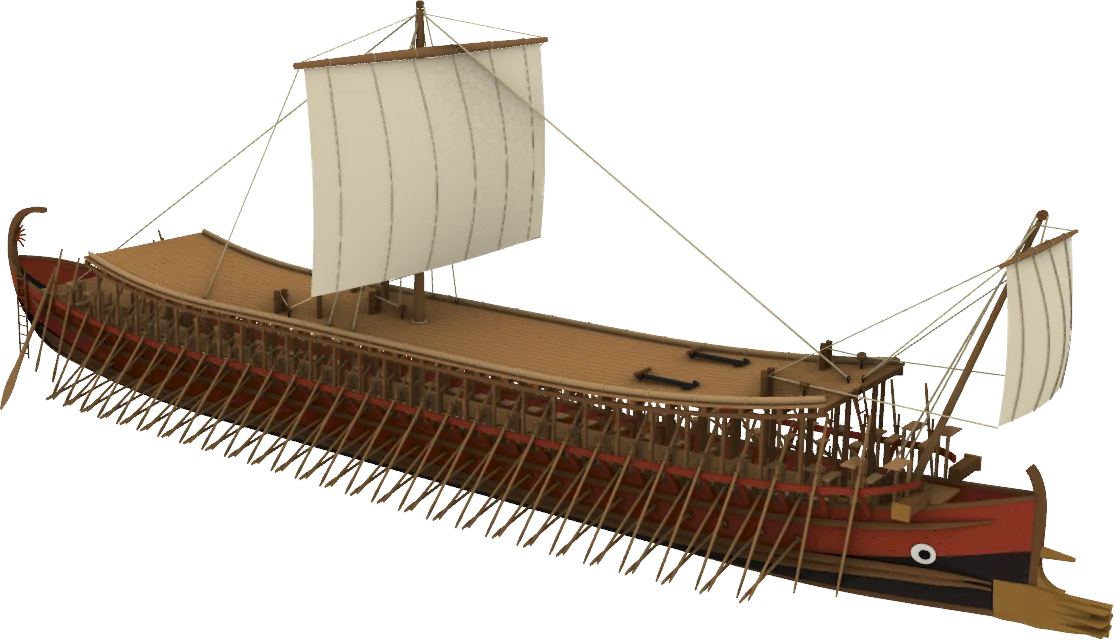
Salamis: The Wooden Wall
Athens was burning. Its people had fled to an island and its hopes rested on a few hundred wooden ships. Their admiral had a plan to lure the mighty Persian fleet into a trap.
Read the story →A collier full of soldiers was run aground below an old fortress at dawn. For a day and a night, a small beach at the tip of Gallipoli decided whether an army could come ashore.
When the Allied fleet failed to force the Dardanelles on 18 March 1915, Britain and France decided to land an army on the Gallipoli peninsula and take the forts from the land. The Ottoman Fifth Army had five weeks to prepare. On the southern tip, at Seddülbahir, the beaches were watched by infantry of the 26th Regiment, dug into trenches with barbed wire at the water’s edge.
The British planned to land at five beaches around Cape Helles. At V Beach, a small curved strand below the ruined fortress of Seddülbahir, they tried something new. The collier River Clyde was fitted with doors in her hull and machine guns on her bows. About 2,000 men of the Munster Fusiliers, the Hampshires and the Dublin Fusiliers would wait inside, while more Dublin Fusiliers came in by open boats. Officers called her the wooden horse, after Troy, which lies just across the strait.
After a naval bombardment, the boats and the ship came in at about half past six. The Ottoman Mehmetçik, as the Turkish soldier is fondly called, were a much smaller force than the attackers. They held their fire until the boats touched the shore and the men began to pour out of the doors. Rifle and machine-gun fire swept the boats, the gangways and the bridge of lighters. Many men were killed in the boats or in the water; a few reached a low bank of sand at the top of the beach and could go no further. Sailors went into the water again and again to hold the lighters in place, and six of them, with their commander Edward Unwin, later received the Victoria Cross.
The Mehmetçik held their trenches through the day under heavy fire from the warships, and lost many men themselves. How many there were, and how many machine guns they had, is still debated: Turkish accounts describe a small force of infantry, while British accounts spoke of fire that seemed far heavier. The men left in River Clyde waited for nightfall and landed in the dark.
The next morning British troops, led by Lieutenant-Colonel Charles Doughty-Wylie, fought their way through the ruined fort and the village of Seddülbahir and took the hill above the beach. Doughty-Wylie was killed at the top. The Mehmetçik, outnumbered and short of reinforcements, fell back inland, where the campaign would go on for eight more months.
River Clyde stayed on the beach as a quay, a water supply and a dressing station. She was later refloated and sailed for fifty years under the Spanish flag before she was scrapped in 1966. V Beach today is a quiet strand below the old walls, with a British cemetery on the shore and Turkish memorials to the Mehmetçik who defended Seddülbahir on the hill above.
Athens was burning. Its people had fled to an island and its hopes rested on a few hundred wooden ships. Their admiral had a plan to lure the mighty Persian fleet into a trap.
Read the story →A great Christian alliance gathered the largest fleet it could find to drive the Ottomans from the sea. Barbaros Hayreddin was waiting for them.
Read the story →More than four hundred galleys met at the mouth of the Gulf of Patras. It was the largest naval battle of its age, and the last great battle fought with oars.
Read the story →