Trafalgar
Twenty-seven British ships against thirty-three. Nelson broke the rules of naval battle, and changed the sea for a hundred years.
Read the story →Nelson's flagship led the line at Trafalgar and broke it. More than two and a half centuries on, she is still a ship of the Royal Navy.
From the Drawing BoardNaval Architect's Perspective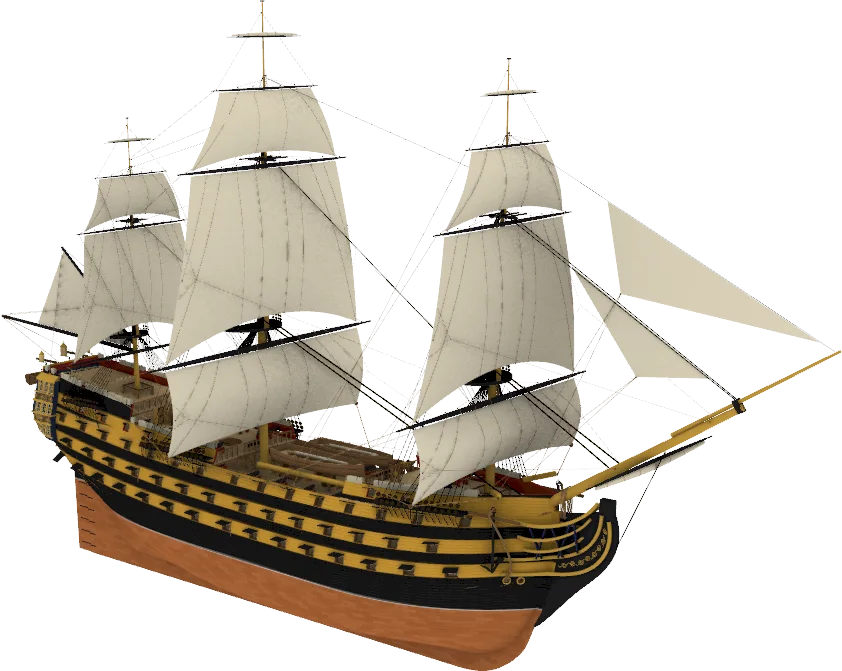
She led the fleet at Trafalgar. More than 250 years after her launch, she is still a commissioned ship of the Royal Navy.
Her keel was laid at Chatham Dockyard in 1759, and 6,000 trees, most of them oak, went into her hull. By the time she was launched in 1765 the war she was built for had ended, and she spent years waiting in reserve.
She finally went to sea in 1778 and fought at Ushant the same year. In 1797 she was the flagship at the Battle of Cape St Vincent, already one of the most famous ships in the navy.
On 21 October 1805 she carried Vice-Admiral Nelson into battle against the combined French and Spanish fleets off Cape Trafalgar. Nelson was shot by a marksman on the deck and died below a few hours later, knowing the battle was won.
In 1922 she was moved into dry dock at Portsmouth to be preserved. Today she is a museum ship and still the flagship of the First Sea Lord.
Twenty-seven British ships against thirty-three. Nelson broke the rules of naval battle, and changed the sea for a hundred years.
Read the story →